ISRO puts NVS-03 in orbit, NavIC back to four working satellites
ISRO's GSLV-F18 lifted off from Sriharikota late on Friday night and placed the NVS-03 navigation satellite in its planned orbit. ISRO's chairman says this brings NavIC, India's own GPS-like system, back to its minimum working strength of four satellites.
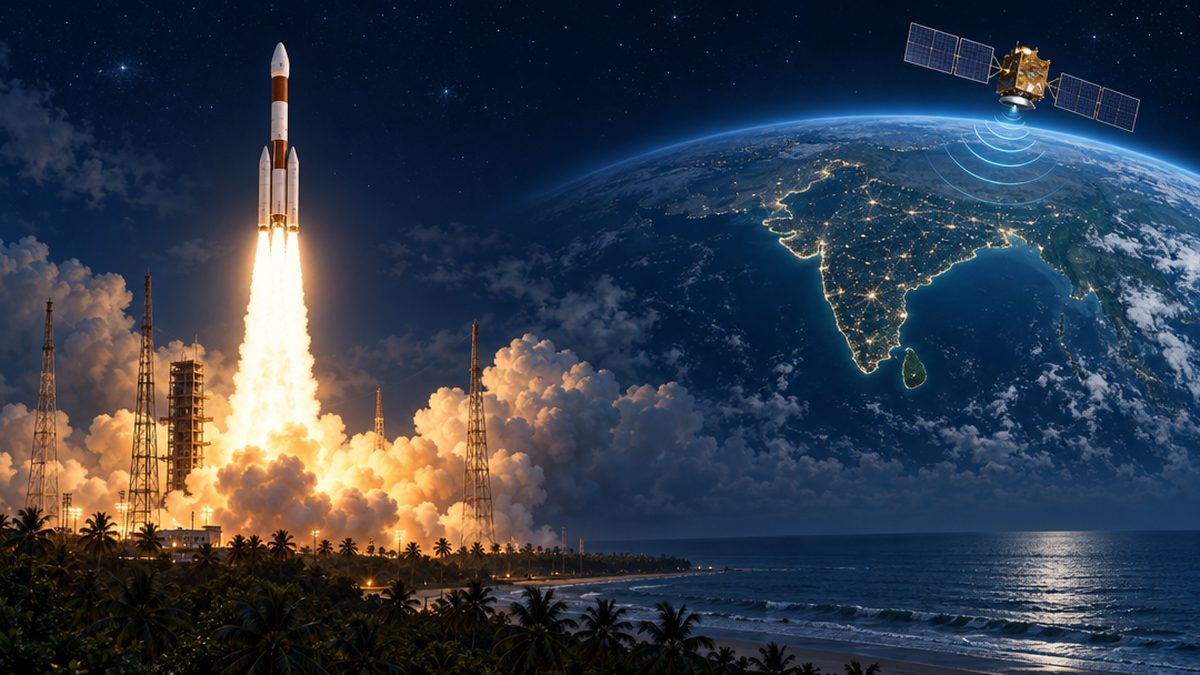
ISRO has done it. The GSLV-F18 rocket lifted off from Sriharikota late on Friday, 30 October 2026, and placed the NVS-03 navigation satellite in its planned orbit. ISRO's official mission page now reads: "GSLV-F18 has successfully placed NVS-03 in the intended orbit."
Earlier this week we wrote about what this launch was meant to do. Here is what happened.
What ISRO has confirmed
From ISRO's own mission page:
- This was the 20th flight of the GSLV rocket.
- It flew from the Second Launch Pad at Satish Dhawan Space Centre, SHAR.
- NVS-03 went into a Geosynchronous Transfer Orbit, a long oval orbit that satellites use before moving to their final spot.
- NVS-03 is the third satellite in ISRO's next-generation navigation series. It carries a made-in-India atomic clock along with bought atomic clocks.
- It adds the L1 signal to the existing L5 and S-band signals. Coverage is India plus about 1,500 km beyond its borders.
What reports add
These details come from news reports, not ISRO's mission page:
- Launch time: about 11:51 PM IST on Friday, says The New Indian Express.
- Weight: about 2,250 kg, per ANI and The New Indian Express. All India Radio's News On Air gives 2,232 kg.
- Orbit: a perigee of about 170 km and an apogee of about 37,000 km, says The New Indian Express. ISRO will now fire the satellite's engines over the next few days to move it to its final slot at 32.5° East.
- Fast turnaround: ISRO chairman Dr V. Narayanan said the launch came just 56 days after the previous GSLV mission, the shortest gap so far, according to ANI and News On Air.
Why it matters
NavIC is India's own satellite navigation system, a desi alternative to the US-run GPS. It had gaps after the earlier NVS-02 satellite failed to reach its orbit in January 2025 because of a valve problem, as The New Indian Express reports.
According to ANI, Dr Narayanan said this launch restores the NavIC constellation to its minimum operational configuration of four satellites, and called NavIC a strategic national asset. News On Air reports him saying this is ISRO's third indigenous atomic clock in orbit, and that the full plan is a seven-satellite constellation.
What it means for your phone
Not much yet. The L1 signal is the kind that phones, smartwatches and fitness trackers already use for GPS, so it makes NavIC easier for consumer devices to pick up. But Dr Narayanan said the constellation needs to be completed before NavIC can be widely built into mobile phones, according to News On Air.
For startups in drones, logistics, fleet tracking and maritime tech, a stronger NavIC means a navigation signal that India controls. That matters for defence work and for any service that cannot afford to lose positioning.
Prime Minister Narendra Modi and Union Minister Jitendra Singh both congratulated ISRO on X after the launch.
Sources: ISRO GSLV-F18/NVS-03 mission page (primary), News On Air, ANI, The New Indian Express, Open (30–31 Oct 2026).
Get every new startup story on WhatsApp.
Join our WhatsApp Channel